
RUNC: Anderson Al Wazni
Anderson Al Wazni strives to help communities hit by climate change.
By UNC Research
April 5, 2023
Natural Sciences · Research Uncovered · Society
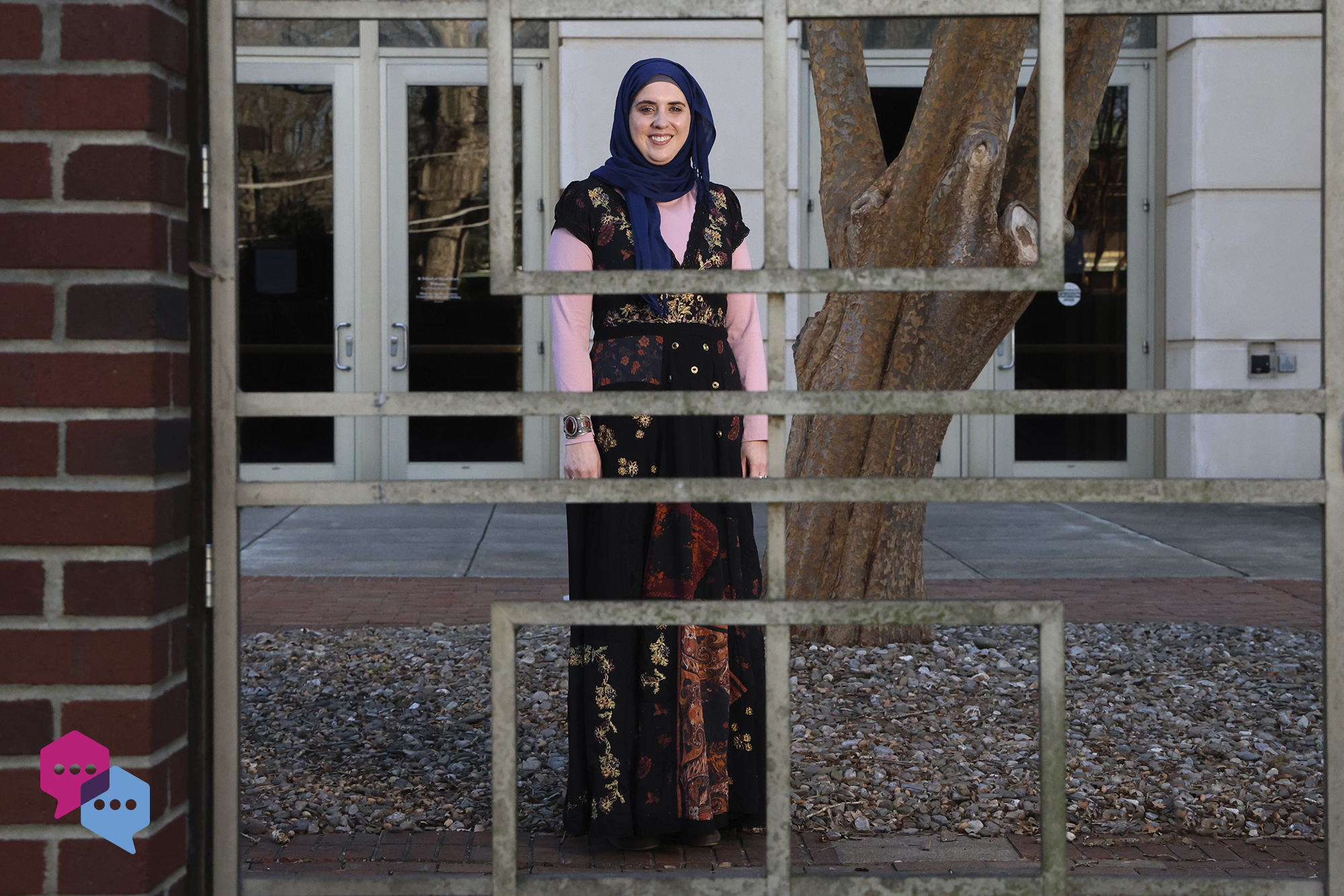
Anderson Al Wazni is a PhD student within the UNC School of Social Work. In her pursuit of environmental justice, she studies how climate change, conflict zones, and human displacement interact.
Q: How did you discover your specific field of study?
A: My field of study is social work, but my particular area is the intersection of climate change, state infrastructure, and violence. Climate change has not been engaged in my field. I am often asked why social work even relates to climate change. That is an unfortunate side effect of only studying the origins of a manmade disaster from a “hard science” lens. They did their part and proved it’s real. Now, we have to fix the social behavior that caused this.
In a really distilled summary: I believe we must pay reparations to Black and Indigenous populations first and then fund other impoverished communities suffering from manmade disasters. If you are poor in America, you are at great risk of dying from climate change. If you are Black, Indigenous, or a person of color your risk is even higher.
Q: Academics are problem-solvers. Describe a research challenge you’ve faced and how you overcame it.
A: We don’t have a good language for climate change, particularly when discussing the intersection of oppressed populations and poverty, because we don’t engage in climate change advocacy. I was part of that problem, and I am still that problem, but my dissertation attempts to find a way to overcome it. I am heavily invested in theory and creating a roadmap that removes purely environmental language from climate change.
The earth is going to survive us. It’s not Earth we need to rescue — it’s us. We weaponized the natural world against us, and now we need to look to each other and reach out a hand. We have to reframe what this crisis is to reconnect, trust each other, and overcome it. But without a language, we cannot communicate — and that’s what I have dedicated my research to.
Q: Describe your research in five words.
A: End climate change, pay reparations.
Q: Who or what inspires you? Why?
A: I have to give credit to two tremendous teachers: Ta-Nehisi Coates and Danica Brown of the Choktaw Nation. Professor Coates’ essay called “The Case for Reparations” is a required text when I teach policy, or any class in social work. It always applies. In a single presentation, Professor Brown absolutely blew my mind about what anarchy is. She taught me that Indigenous populations’ “anarchy” approach to society allows for the lateral movement of resources to be redistributed equitably.
Q: If you could pursue any other career, what would it be and why?
A: I would love to train for an ultra-marathon or learn high-end patisserie. I’m into both.
Research UNCovered delves into the lives of UNC researchers from all disciplines and career levels, showcasing not only their research prowess but personal experiences in academia and beyond. Know someone we should feature? Nominate a researcher.