
Stephanie Smith
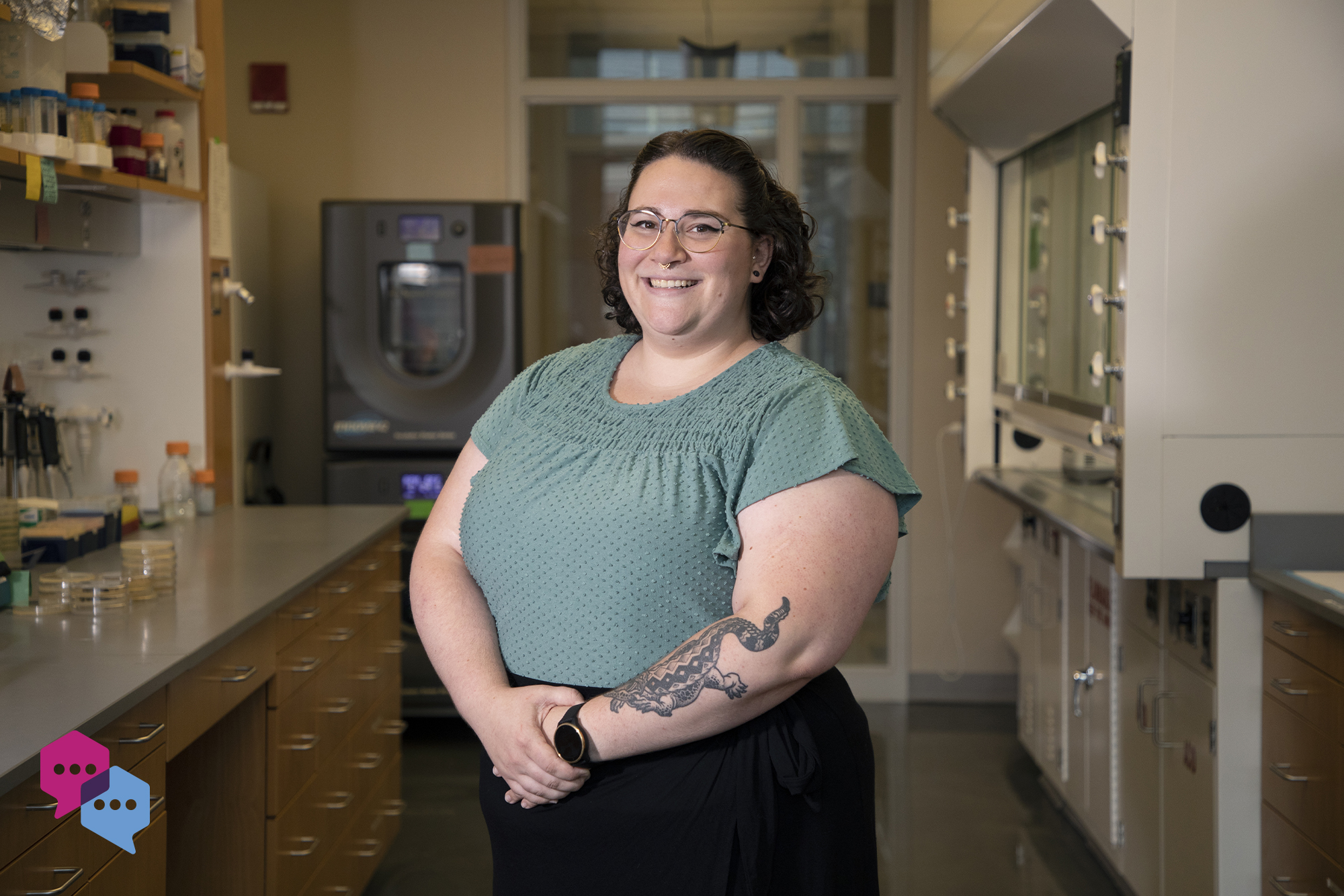
Stephanie Smith is a PhD student in the Department of Earth, Marine, and Environmental Sciences within the UNC College of Arts & Sciences. By observing squid, she researches how bacteria acquire and exchange DNA from other bacterial cells — a process called horizontal gene transfer — to improve our understanding of bacterial evolution.
September 29, 2021
Natural Sciences · Research Uncovered
Q: When you were a child, what was your response to this question: “What do you want to be when you grow up?”
A: I always wanted a career that would let me be near the ocean, but as a kid I had no idea what kind of job that might be. Some days I wanted to be a zookeeper or a dolphin trainer. Other days I wanted to be a fishing captain or run an aquarium.
Q: Share the pivotal moment in your life that helped you choose your field of study.
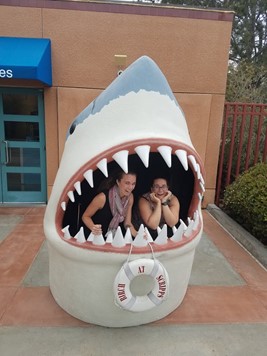
A: I grew up crabbing along the North Carolina coast each summer, and people would often stop me to ask about what I was catching. Wanting to be able to provide answers to my fellow beachgoers, I remember staying up late on vacation reading all about blue crabs — how to identify their sex, what their eggs look like, and how they swim. I loved learning about the ocean, but even more than that I loved teaching others about what I discovered. From that point on I knew that I wanted a career in research where I could explore the ocean and mentor other scientists.
Q: Tell us about a time you encountered a tricky problem. How did you handle it and what did you learn from it?
A: Science is full of tricky problems! As a young graduate student, it can be really intimidating and disheartening when your results aren’t what you expected or an experiment “isn’t working.” I’ve worked on several projects where I thought I was performing experiments incorrectly because my results were unexpected, and it turned out that the data was real and ultimately led the project in a much more interesting direction. These experiences have taught me to trust my instincts as a scientist and that it’s important to let your data speak for itself without any expectations of what you might find.
Q: Describe your research in 5 words.
A: Bacteria trade so much DNA.
Q: What are your passions outside of research?
A: I love music. My first year of grad school I bought myself a keyboard, and when I’m feeling stressed about an experiment or troubleshooting a project, I often sit down and play my favorite songs to clear my head. I also make sure that my schedule allows me to have quality time with friends, and we do lots of board game nights and potluck dinners.