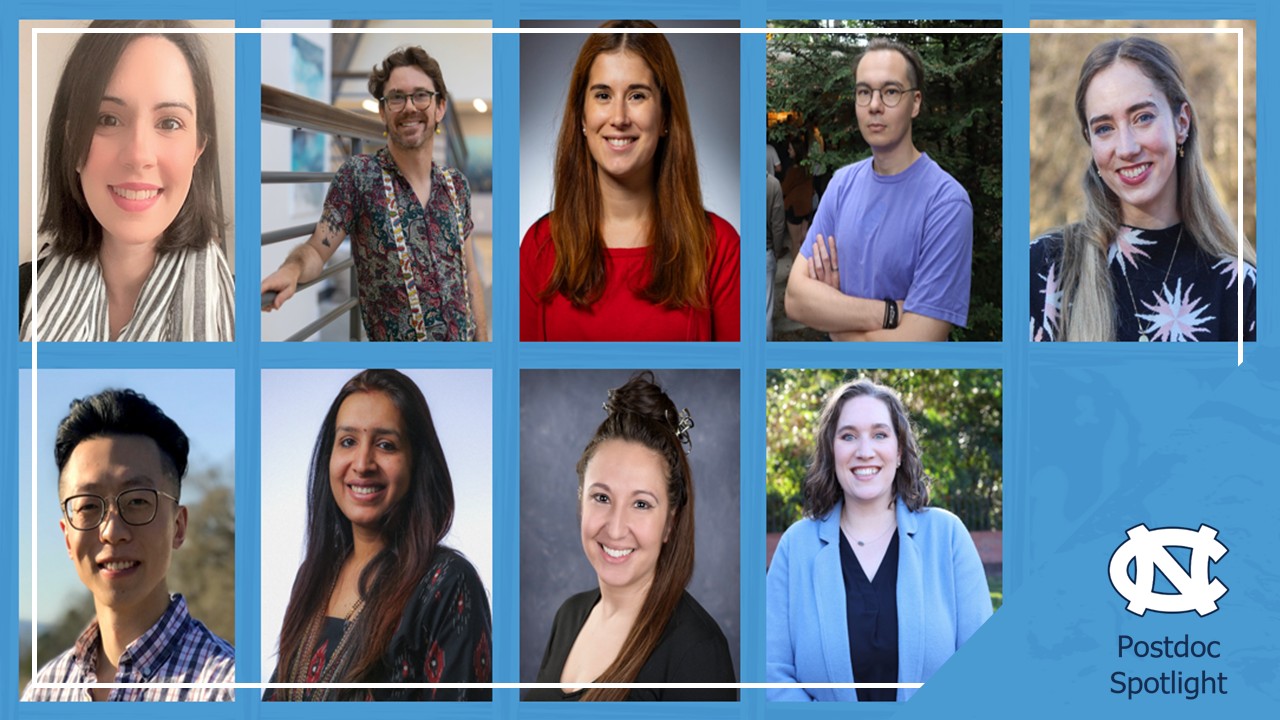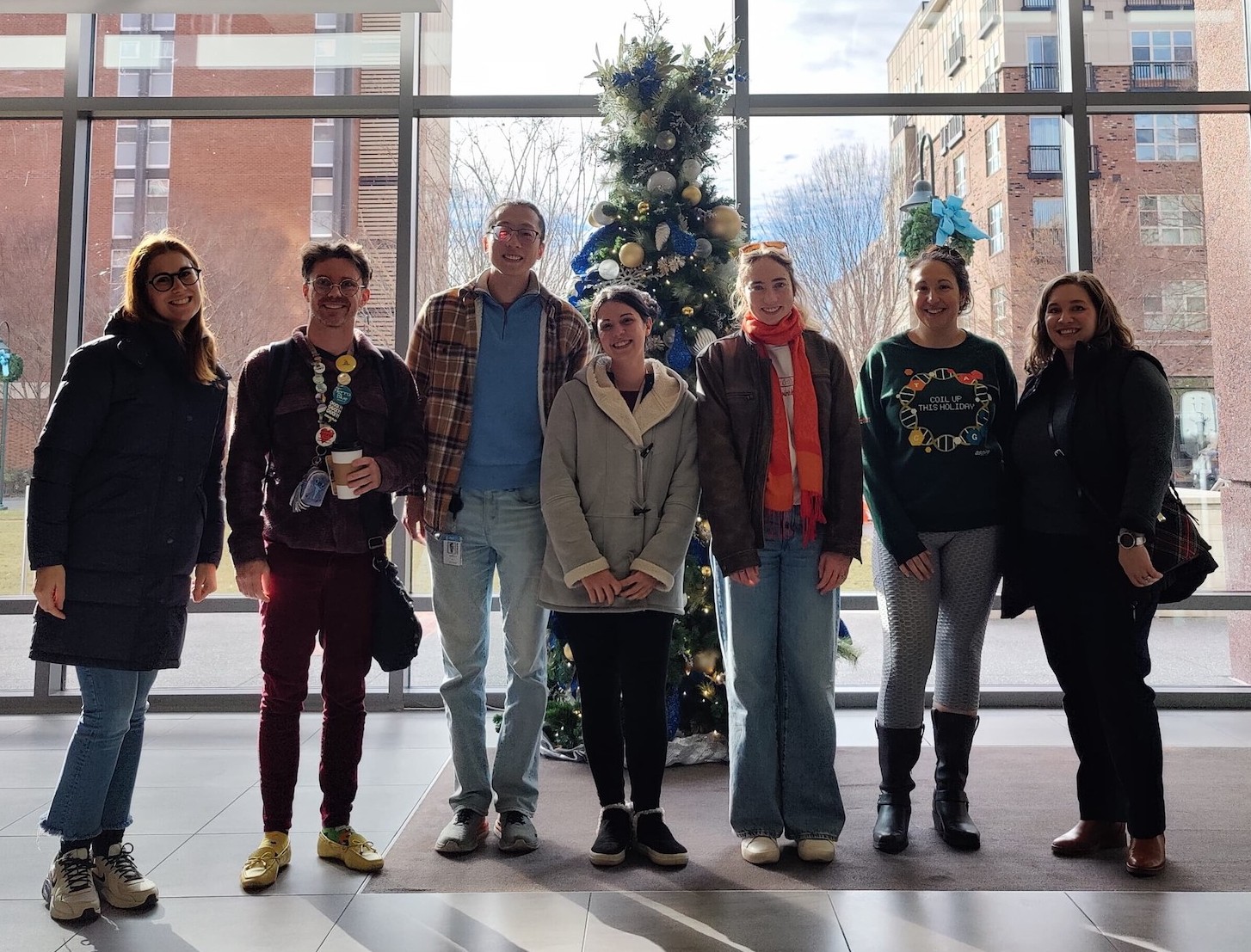
For those unfamiliar, what is the Postdoctoral Association and what role does it play at UNC?
The Postdoctoral Association (PDA) is an independent, postdoc-led organization dedicated to serving postdoctoral scholars at UNC by fostering connection, sharing resources, and strengthening communication across campus. Through social events, networking opportunities, and informal gatherings, the PDA brings postdocs together across labs and departments and addresses issues relevant to the postdoctoral community.
The UNC PDA also includes dedicated committees and affinity groups, such as the International Postdoctoral Alliance, parenting resources, social media groups, and inclusion-focused alliances, that address the needs of postdocs from a wide range of backgrounds and life circumstances. The PDA works closely with the Office of Postdoctoral Affairs (OPA), the official administrative unit supporting postdoctoral training and development, to help improve the overall postdoctoral experience at UNC and ensure postdoc voices are heard.
Can you speak a little about what the postdoc experience is like at UNC-CH, and what are some of the benefits of being a Tar Heel postdoc?
Life as a postdoc at UNC–Chapel Hill tends to feel both energizing and deeply collaborative. You’re surrounded by an amazing University campus and a vibrant area. As postdocs at UNC-CH we get to be around professionals of all fields who genuinely love what they do, and that enthusiasm can be experienced in formal professional settings but also in everyday hallway conversations. As UNC postdocs, we feel supported by UNC’s commitment to professional development, mentoring, and interdisciplinary work, so we are not just doing everyday work, we are actually growing into the next stage of our career. Being a Tar Heel postdoc also includes enjoying a vibrant campus culture and the sense of belonging that comes from being part of a community that values curiosity and impact. It’s the kind of environment where you can push your ideas further and feel at home while doing it.
What do you see as some of the biggest issues facing postdocs right now?
1. Job Security and Career Path Uncertainty
Postdoctoral positions are temporary and often funded on short-term contracts which creates stress around job stability and long-term planning. We also feel unclear about our long-term career trajectory for careers both inside and outside of academia. Given the current political climate, this is an added layer of stress for whether our positions will remain and funding will continue to be available to support us.
2. Compensation and Benefits
Compensation and benefits don’t always match our level of training, expertise, and research output. Our salaries don’t keep pace with rising cost of living, especially in university towns like Chapel Hill. We experience stress around healthcare costs, retirement plans, parental leave, and childcare support.
3. Mentorship and Career Support
Not all postdocs receive structured mentorship or professional development opportunities. We do a lot of learning on the fly and must seek out resources independently. This contributes to uneven experiences and outcomes.
4. Work–Life Balance and Well-Being
The culture of long hours, pressure to publish, and competition for grants can affect mental and physical health. For parents or caregivers, such as those balancing family responsibilities, these demands can be especially heavy.
5. Recognition and Inclusion
Postdocs can feel overlooked compared to faculty when it comes to institutional support, community belonging, and recognition for their contributions to research and teaching.
Are there solutions to these challenges? What can be done at the national, institutional, and individual levels?
Many of the challenges facing postdocs can only be addressed through shared responsibility across national, institutional, and individual levels. Nationally, funding agencies and policymakers could improve stability by increasing expectations for postdoctoral salaries, standardizing expectations for compensation and benefits, and providing multi-year funding mechanisms that support both training and career transitions. This would ease uncertainty and allow postdocs to plan for the future. Institutionally, we acknowledge the strong opportunities UNC provides to support postdocs through investments in competitive pay and benefits, clearer mentorship structures, and career development that recognizes the wide range of career paths postdocs pursue. This support includes offering workshops on topics such as grant writing, industry careers, and leadership; establishing clear expectations and evaluation criteria to help postdocs grow and succeed; providing career counseling tailored specifically to postdocs, with dedicated advisors and resources; and helping postdocs feel connected to the broader university community.
In this context, the PDA plays an especially important role as both an advocate and a community-building resource, helping postdocs feel visible and empowered to voice concerns and connected to others on similar career paths. We are focused on raising awareness around existing resources, and getting the word out to increase the engagement and utilization of existing resources at UNC for postdocs. At the individual level, postdocs can take meaningful steps by engaging with the PDA, seeking mentorship, and advocating for their needs while prioritizing our individual well-being.
What do you hope postdocs take away from engaging with the PDA?
The hope is that postdocs can build a strong sense of community by engaging with the PDA. For those new to UNC, especially coming from another country, the PDA can help navigate a challenging transition. Connecting with people going through similar experiences, receiving advice, and forming friendships can make the postdoctoral journey much more enjoyable.
Beyond community, the PDA also aims to provide opportunities for professional growth—whether through networking, leadership roles, or skill-building activities. The goal is for the PDA to offer both the support and the tools that help postdocs overcome challenges and make their time at UNC not only smooth but truly rewarding.
What keeps you motivated to do this work on behalf of your fellow postdocs?
Motivation in this kind of work usually comes from a mix of solidarity and possibility. When you see how hard postdocs push themselves – doing research, teaching, mentoring, planning for the next career step and trying to have work-life balance on top of that – it’s impossible not to want to make that journey a little smoother for everyone. Advocating on their behalf feels meaningful because even small improvements in resources, policies, or community support can have a real impact on someone’s day‑to‑day experience. What keeps the momentum going is the sense that postdocs deserve to be heard, valued, and empowered, and that contributing to that effort helps strengthen the entire research community.
As a group that regularly reflects on the postdoc experience, what advice would you have for new postdocs, or what do you wish you had known when you first started?
A piece of advice we’d offer any new postdoc is to treat your first months as an investment in your future. It’s easy to get swept up in the work itself, deadlines, and the pressure to prove yourself, but taking time to understand the culture of your department, build relationships, and clarify expectations with your mentor pays off enormously. Another aspect we like to encourage for new postdocs is to take the time to make an Individual Development Plan (IDP). This will help you to identify your skills, interests, professional goals and to create a plan to achieve them. It can also be a good communication tool for mentor-mentee interactions. We also wish we had known how important it is to advocate for your own professional development – seeking out workshops, networking opportunities, and mentorship beyond your immediate lab can open doors you didn’t even know existed. Most of all, remember that you’re not alone in this transition; leaning on the postdoc community can make the experience far more rewarding and sustainable.
A question we always ask in the Postdoc Spotlight Series: can you recommend any interesting things for postdocs to experience while living in the Triangle area?
The Triangle is a great place for postdocs because it blends intellectual energy with a genuinely fun, livable environment. You can spend a Saturday morning exploring the farmers’ markets in Carrboro or Durham, hike the trails at Eno River or Umstead, or dive into the food scene that ranges from legendary barbecue to inventive global cuisine. Museums like the Nasher and the NC Museum of Art offer a steady stream of exhibits, and there’s always live music somewhere—from small local venues to big outdoor shows. What many postdocs appreciate most is how easy it is to find community here; whether you’re into outdoor adventures, craft breweries, book clubs, or sports, the Triangle gives you plenty of ways to feel connected and recharge.
Finally, how can postdocs get involved with the PDA?
The Postdoctoral Association (PDA) welcomes all postdocs, whether you are interested in taking on an active role or simply connecting with fellow postdocs across campus. There are several easy ways to get involved and stay connected:
- Visit the PDA Website
Learn more about who we are, upcoming meetings, and events on the PDA website! - Join the PDA Social Listserv
Receive announcements about postdoc social events and community-building activities. - Join the Postdoc Parent Group
Connect with fellow postdoc parents to share resources, advice, and support around balancing research, family responsibilities, childcare, and life at UNC. - Join the Postdoc Research Café Listserv
Stay informed about upcoming talks and presentations from UNC postdocs. - Follow the PDA on Social Media
Stay up to date on events and initiatives by following the PDA on Instagram and LinkedIn. - Attend PDA Meetings
PDA meetings are held on the first Monday of each month at 4:00 pm and are open to all postdocs.